Physiotherapy

Discover physiotherapists, clinics, rehabilitation information, professional opportunities and physiotherapy resources.

Thursday, 25 June 2020

“Poor Posture” A Modern Day Epidemic & its Physiotherapy treatment

“Poor Posture” 

A Modern Day Epidemic & Physiotherapy


Poor posture is a modern-day epidemic. Research has shown that children as young as 10 years of age are demonstrating spinal degeneration in x-ray. Certain postures, like: forward head posture, have been linked to migraines, high blood pressure, &  decreased lung capacity (less oxygen to your body). A 2004 study in the Journal of American Geriatric Society even showed a significant relationship between bad posture & early death. If you have bad posture, then it is a good news-bad news scenario. Obviously, the bad news is that poor posture has some negatives (and we didn’t even touch on the relationships with self-esteem and confidence), but the good news is that it can be improved.

What is posture?

Posture is how you hold your body. There are two types

Dynamic posture:


Dynamic posture is how you hold yourself when you are moving, like when you are walking, running, or bending over to pick up something. 

Static posture:

Static Posture is how you hold yourself when you are not moving, like when you are sitting, standing, or sleeping. Body segments are aligned and maintained in fixed positions. 

It is important to make sure that you have good dynamic and static posture

Posture Assessment

In standing Position:

The key to good posture is the position of the spine. The spine has three natural curves - at your neck, mid back, and low back. Correct posture should maintain these curves, but not increase them. Your head should be above your shoulders, and the top of your shoulder should be over the hips
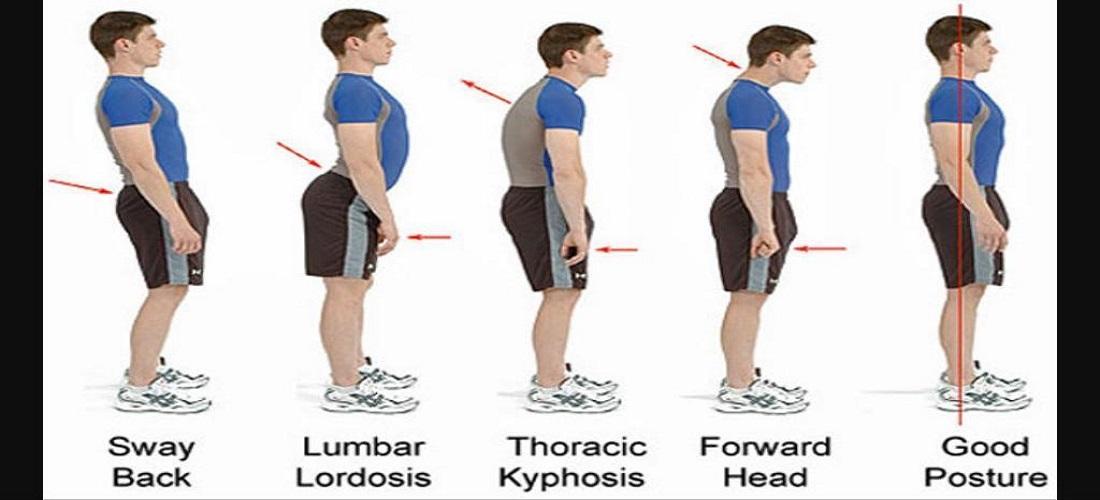
C:\Users\ONPC\Desktop\postur in standing.jpg

  • In an ideal posture, the line of gravity should pass through specific points of the body. This can simply be observed or evaluated using a plumb line to assess the mid-line of the body.

  • This line should pass through the lobe of the ear, the shoulder joint, the hip joint, though the greater trochanter of the femur, then slightly anterior to the midline of the knee joint and lastly anterior to the lateral malleolus.

  • When viewed from either the front or the back, the vertical line passing through the body's center of gravity should theoretically bisect the body into two equal halves, with the bodyweight distributed evenly between the two feet.

Examples of Types of Standing Posture

  • Lordotic posture- Lordosis refers to the normal inward curvature of the spine. When this curve is exaggerated it is usually referred to as hyperlordosis. The pelvis is usually tilted anteriorly.

  • Sway Back Posture- In this type of posture, there is forward head, hyper-extension of the cervical spine, flexion of the thoracic spine, lumbar spine extension, posterior tilt of the pelvis, hip and knee hyper-extension and ankle slightly plantarflexed.

  • Flat back posture- In this type of posture, there is forward head, extension of the cervical spine, extension of the thoracic spine, loss of lumbar lordosis and posterior pelvic tilt.

  • Forward head posture - Describes the shift of the head forward with the chin poking out. It is caused by increased flexion of the lower cervical spine and upper thoracic spine with increased extension of the upper cervical spine and extension of the occiput on C1.

  • Scoliosis - This is a 3 dimensional C or S shaped sideways curve of the spine

  • Kyphosis - An increased convex curve observed in the thoracic or sacral regions of the spine.

Precautions to be taken while standing:

  • Stand up straight and tall

  • Keep your shoulders back

  • Pull your stomach in

  • Put your weight mostly on the balls of your feet

  • Keep your head level

  • Let your arms hang down naturally at your sides

  • Keep your feet about shoulder-width apart


In assessing posture, symmetry and rotations/tilts should be looked out for in the anterior, lateral and posterior views. Assess:-

  • Head alignment

  • Cervical, thoracic and lumbar curvature

  • Shoulder level symmetry

  • Pelvic symmetry

  • Hip, knee and ankle joints

In sitting:-
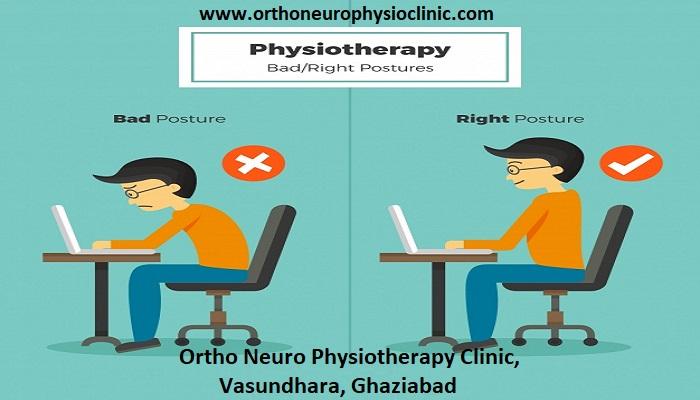
C:\Users\ONPC\Desktop\Posture pic.jpg

  • The ears should be aligned with the shoulders and the shoulders aligned with the hips

  • The shoulders should be relaxed and elbows are close to the sides of the body

  • The angle of the elbows, hips and knees is approximately 90 degrees

  • The feet flat on the floor

  • The forearms are parallel to the floor with wrists straight

  • Feet should rest comfortably on a surface

Why Physiotherapy is must for bad postures?

Education, teach client to:

  • Be mindful of posture during everyday activities, like watching television, washing dishes, or walking

  • Stay active. Any kind of exercise may help improve your posture, but certain types of exercises can be especially helpful. eg. yoga, tai chi, and other classes that focuses on body awareness. It is also a good idea to do exercises that strengthen your core.

  • Maintain a healthy weight. Extra weight can weaken abdominal muscles, cause problems for pelvis and spine, and contribute to low back pain.

  • Wear comfortable, low-heeled shoes. High heels, for example, can throw off balance and force person to walk differently. This puts more stress on muscles and harms posture.

  • Make sure work surfaces are at a comfortable height for you, whether sitting in front of a computer, making dinner, or eating a meal

Physiotherapist can identify posture style and provide hands-on treatment, posture correction exercises and helpful home products for you to achieve great posture. Some of objectives are listed below:

  • Obtain Normal Joint Range of Motion. Necessary to allow you achieve good posture alignment. eg Thoracic Manual Therapy.

  • Obtain Normal Muscle Length. If muscles too tight client will be unable to attain a normal posture.

  • Obtain Good Muscle Strength. To be able to pull clients body into the correct posture.

  • Obtain Excellent Muscle Endurance. Postural muscles need to able to work for hours on end. Poor endurance is a major factor in habitual poor posture.

  • Normal Nerve Extensibility. Neural tissue needs enough length to allow for normal posture.

  • Good Spatial Awareness. ie where you are in space. Provide with verbal and visual feedback and assist with postural taping.

  • Perfect Posture Habits. The hardest part is the initial change, then reinforcing the correct habit


Precautions to be taken while sitting:


  • Switch sitting positions often

  • Take brief walks around your office or home

  • Gently stretch your muscles every so often to help relieve muscle tension

  • Don't cross your legs; keep your feet on the floor, with your ankles in front of your knees

  • Make sure that your feet touch the floor, or if that's not possible, use a footrest

  • Relax your shoulders; they should not be rounded or pulled backwards

  • Keep your elbows in close to your body. They should be bent between 90 and 120 degrees.

  • Make sure that your back is fully supported. Use a back pillow or other back support if your chair does not have a backrest that can support your lower back's curve.

  • Make sure that your thighs and hips are supported. You should have a well-padded seat, and your thighs and hips should be parallel to the floor.


Physiotherapy advice can improve posture


  • Be mindful of your posture during everyday activities, like watching television, washing dishes, or walking

  • Stay active. Any kind of exercise may help improve your posture, but certain types of exercises can be especially helpful. They include yoga, tai chi, and other classes that focuses on body awareness. It is also a good idea to do exercises that strengthen your core (muscles around your back, abdomen, and pelvis).

  • Maintain a healthy weight. Extra weight can weaken your abdominal muscles, cause problems for your pelvis and spine, and contribute to low back pain. All of these can hurt your posture.

  • Wear comfortable, low-heeled shoes. High heels, for example, can throw off your balance and force you to walk differently. This puts more stress on your muscles and harms your posture.

  • Make sure work surfaces are at a comfortable height for you, whether you're sitting in front of a computer, making dinner, or eating a meal.


Physiotherapy treatment may include:


  1. Assessment and diagnosis of postural habits.

  2. Postural education and training.

  3. Manual therapy and soft tissue massage.

  4. Dry needling.

  5. Postural taping.

  6. Electrotherapy.

  7. Joint mobilization.

  8. Corrective exercises and movements to improve flexibility, strength and posture.


For more Information:- 


Dr. Ravinder Kumar, Ortho Neuro Physiotherapy Clinic, Vasundhara, Ghaziabad.


Facebook - https://www.facebook.com/orthoneurophysioclinic/ 


Web –     www.orthoneurophysioclinic.com      www.orthoneurophysioclinic.in   

 

D:\Aa new videos\What is pt\Pic 1.png


Thursday, 28 May 2020

Respect for Patients by Doctors

Respect for Patients by Doctors


Mutual Relationship of respect & Dignity between Doctor & Patients


Respect for the dignity of the person: This principle is drawn from the Universal Declaration of Human Rights (United Nations, 1948) which proclaims that the basis for freedom, justice and peace is founded on the recognition of the inherent dignity and equality of human beings.

Respect and Dignity

Helping your loved one maintain a sense of dignity can be one of the most difficult aspects of care-giving.

Take a minute to consider your special role as a Doctor. More than a professional Doctor, you know the person you care for. You know the whole person, his likes and dislikes, his individual strengths and weaknesses, and his wants and needs.

It’s easy to slip into a “protective” role when you care for someone else, especially a family member. But we need to remember that unless the person is experiencing some cognitive failure (brain damage because of a stroke, dementia, or other health problem), he still makes decisions about his life. Sometimes he may make decisions that you wouldn’t make, but it is his choice. This can be difficult for you as a caregiver; you will need to watch yourself and guard against over-protection.


Among the most important human needs is the desire for respect and dignity. That need doesn’t change when a person becomes ill or disabled. Indeed, it may grow even stronger.

There are many things you as a doctor can do to make sure the Patients in your care receives the respect and dignity that is every person’s basic human right


Give Treatment Patients With Dignity.

·        Listen to his concerns.

·        Ask for his opinions and let him know they are important to you.

·        Involve him in as many decisions as possible.

·        Include him in the conversation. Don’t talk about him as though he’s not there.

·        Speak to him as an adult, even if you’re not sure how much he understands.


Patients tell us that dignity and respect means:

 • being treated with care and compassion;

 • polite, courteous staff;

 • having their privacy and dignity actively respected; and

 • having their views listened to and taken into consideration.


7 ways to ensure respectful care Patients


·        Treat every patient equally. ...

·        Remember basic courtesies. ...

·        Be present with your patient. ...

·        Get acquainted. ...

·        Understand the patient perspective. ...

·        Communicate with respect. ...

·        Replace labeling with positive solutions.


www.orthoneurophysioclinic.in   www.orthoneurophysioclinic.com

#orthoneurophysioclinic

https://www.facebook.com/atlas.healthcare.92                          

https://business.google.com/posts/l/10842143055492898829                                                                                                                                                      

https://www.linkedin.com/in/orthoneurophysioclinicatlas-healthcare-5019091a9/

https://twitter.com/DrRavinderKumar

https://www.facebook.com/orthoneurophysioclinic/

https://www.youtube.com/channel/UC8G-KN4fJV9O2yffNhpwMhw?view_as=subscriber


Wednesday, 20 May 2020

Is Physiotherapy at home really helpful?

Is Physiotherapy at home really helpful? 

Physiotherapy at home  helps people of all ages who have medical conditions, illnesses, injuries that limit their regular ability to move and function.
A proper  physiotherapy program can help individuals return to their prior level of functioning &  encourage activities and lifestyle changes that can help prevent further injury and improve overall health and well being.
So, why exactly is physiotherapy so important?


 Few reasons physiotherapy at home really helpful:- 

1. Reduce or eliminate pain.
Therapeutic exercises and manual therapy techniques such as joint and soft tissue mobilisation or treatments such as ultrasound, taping or electrical stimulation can  relieve pain and restore muscle & joint function to reduce pain. Physiotherapy can also prevent pain from returning.
2.  . Avoid surgery
If physical therapy helps you eliminate pain / heal from an injury, surgery may not be needed. Even if surgery is required, then you may benefit from pre-surgery physiotherapy If you are going into a surgery stronger and in better shape, you will recover faster afterward in many cases.

2. Improve mobility.
If you’re having trouble standing, walking / moving, regardless of your age, physiotherapy can help. Stretching and strengthening exercises help restore your ability to move. Physiotherapists can properly fit individuals with a cane, crutches or any other assistive device, or assess for orthotic prescription.
Customising an individual care plan, whatever activity that is important to an individual’s life can be practiced and adapted to ensure maximal performance and safety.
4.  Recover from a stroke.
It is common to lose some degree of function and movement after stroke. Physiotherapy helps to strengthen weakened parts of the body and improve gait & balance.
Physiotherapists can also improve stroke patients’ capability to transfer and move around in bed so  they can be more independent around the home, &  reduce their burden of care for toileting, bathing, dressing and other activities of daily living(ADL)
5.  Recover from or prevent a sports injury.
Physio understand how different sports can increase your risk for specific types of injuries (such as stress fractures for distance runners). They can design appropriate recovery or prevention exercise plan for you to ensure a safe return to your sport.

6.  Improve your balance and prevent falls.
When you begin physiotherapy session, you will get screened for fall risk. If you’re at high risk for falls, physiotherapists will provide exercises that safely and carefully challenge your balance as a way to mimic real -life situations.
Physiotherapists also help you with exercises to improve coordination and assistive devices to help with the safer walking. When the balance problem is caused by a problem in one’s vestibular system,
Physio can perform specific maneuvers that can quickly restore proper vestibular functioning, and reduce and eliminate all symptoms of dizziness or vertigo.
7.  Manage diabetes and vascular conditions.
In the  diabetes management plan, exercise can help effectively control blood sugar. Additionally, people with diabetes may have problems with sensation in their feet and legs.
Physio can help educate these patients on proper foot care to prevent further problems down the road. They can also assist with pain management.
8.  Manage age-related issues
As individuals age, they may develop arthritis/ osteoporosis or need a joints replacement. Balance also tends to decrease significantly and people develop a much higher risk for falls& others. Physiotherapists are experts in helping patients recover from joint replacement, & manage arthritic or osteoporotic conditions conservatively.
9.  Manage heart and lung disease.
While patients may complete cardiac rehabilitation after a heart attack/ procedure, you also may receive physiotherapy session  if your daily functioning is affected.
For pulmonary problems, physiotherapy can improve quality of  life through strengthening, conditioning and breathing exercises, and help patients clear fluid in the lungs.
10.  Manage women’s health and other conditions.
Women have specific health concerns, such as with pregnancy & others  care. Physiotherapists can offer specialized management of issues related to women’s health. Additionally, physiotherapy can provide specialised treatment for bowel incontinence, breast cancer, constipation, fibromyalgia, lymphedema, male pelvic health, pelvic pain, and urinary incontinence.
If you have questions about how physiotherapy may help you or someone you care about, please don’t hesitate to contact at  # orthoneurophysioclinic

By
Dr. Ravinder Kumar
Ortho Neuro Physiotherapy Clinic, Vasundhara, Ghaziabad


Monday, 18 May 2020

Corona crises and physiotherapy

Physiotherapy is advance health care system in itself. This is the preventive medicine for corona also.

Like other respiratory distress COVID-19🗣️ is also a severe respiratory distress.


It affects different people in different ways. Most infected people will develop mild to moderate illness and recover without any hospitalization.
Most common symptoms of COVID-19 infection are:
Fever
Dry cough🗣️
Tiredness🥱

Less common symptoms of COVID-19 infection:
Aches and pains😩
Sore throat🥵
Diarrhoea😬
A rash on skin, or discolouration of fingers or toes🤲
Conjunctivitis🥺
Headache🤯
Loss of taste or smell😤

Serious symptoms of COVID-19 infection:

Difficulty breathing or shortness of breath
Chest pain or pressure
Loss of speech or movement

Kindly seek immediate medical attention if you have serious symptoms. 
Always call before visiting your doctor or health facility for the safety purpose.

People with mild symptoms mentioned above and who are otherwise healthy should manage their symptoms at home.

On average it takes 5–7 days from when someone is infected with the virus for symptoms to show, however it can take up to 14 days.
*Physiotherapy management:

1: Breathing exercises:🥱 Breathing exercises include trying to hold your breath for 15 seconds and then relax.
Hold time can be increased gradually.
2: Chest expansion 🤷‍♀️
3: Relaxation exercise: Panic and social stigma attached to this disease in society 💔.
So relaxation 🙌 is required for the patient. It help to level up the mood and boost the immunity.
4: stretching exercises🤛🤜🏻
5: Play therapy🥁🎺
6: Diet 🍉🍆🥝

The Role of Physiotherapy in Dermatology: Bridging Skin Health and Functional Recovery

  The Role of Physiotherapy in Dermatology: Bridging Skin Health and Functional Recovery When we think about dermatology, we often think of ...